Your Company’s “Digital Twin”: How Your Brand Is Represented in LLMs’ Training Data and How You Can Shape It
\n
Pixenon Growth Agency
\n
When a user asks Claude, “Which growth agencies stand out in Izmir?”, the model already has an “opinion” about you. This opinion is a digital twin formed from signals collected from different corners of the web, outside your control, about what your brand does, whom it serves, how trustworthy it is, its price segment, and even its “vibe.”
\n
This digital twin does not have to match your actual company. It may be outdated, incomplete, or wrong, or, if you’re lucky, it may even be a better version of you than you really are. But here’s what matters: the user sees this digital twin, not you.
\n
AI’s answer becomes the definitive statement about your brand at that moment: there is no competing headline to click, no meta description to optimize, no chance to present your own narrative alongside competitors. AI has already made the selection, formed the opinion, and made the decision.
\n
As Pixenon growth agency, our AI visibility team, led by our founder Pixenon Group, sees this “digital twin” concept as an asset that brands must now actively manage. In this article, we cover how this digital twin is formed, why most companies are “blind” to it, and how you can audit and shape this representation.
\n
\n
The “Blind Spot”: Most Companies Haven’t Even Asked This Question
\n
The critical question most marketing teams don’t ask is this: what does an AI model say about your brand when describing it to a potential customer? Is this description accurate? Is it positive? Is your brand mentioned at all? For most companies, the honest answer is concerning: they have no idea.
\n
Brand perception in AI answers has become a critical factor in modern marketing strategy, but it remains a major blind spot. The reason is simple: Google gives you Search Console data, social platforms give you reach metrics, review sites give you ratings, but ChatGPT gives you nothing. There is no impression data, no analytics dashboard, no built-in way to see what it says about you or your competitors. And only about 20% of ChatGPT citations contain clickable attribution links visible in GA4; the remaining 80% are brand recommendations, comparisons, and explanations that shape purchasing decisions and are completely invisible to traditional analytics.
\n
The scale of this blind spot cannot be ignored either: ChatGPT processes more than 2.5 billion queries per day, Google AI Overviews is triggered in about 48% of searches, and 89% of B2B buyers turn to generative AI during their purchasing journeys. Your brand is either included in these answers or it isn’t, but there was no way to know, until now.
\n
\n
How Is the Digital Twin Formed? Two Different Architectures
\n
A technical distinction is very important here, because this distinction determines “when and how” you can shape your digital twin. Not all AI systems work the same way. Models such as GPT-4 or the base versions of Claude rely heavily on training data; by contrast, a growing class of AI tools uses a different architecture: Retrieval-Augmented Generation (RAG).
\n
Training data-based models (for example, cases where ChatGPT is not doing live search) have a “frozen” image of your brand; this image is based on whatever was on the web at the time the model was trained. This may reflect a “you” from months or years ago.
\n
RAG-based tools, especially Perplexity but increasingly systems embedded in other AI assistants and enterprise search products as well, retrieve live web content at query time instead of relying on static training data: they pull current pages, articles, and sources and generate the answer based on them. This fundamentally changes the timeline of AI brand perception for these platforms.
\n
The practical consequence of this distinction is this: correcting a “wrong” or “outdated” brand representation in a training data-based model does not change the moment you publish new content on the web; this change must be reflected in the next model training cycle, which can take months. By contrast, the representation in a RAG-based system reflects current content on the web, so it can be corrected much faster when you publish the right signals.
\n
Because Gemini has stronger real-time grounding through Google’s index, your structured data, Google Business Profile, and recent press coverage feed its answers more directly, making Gemini both more accurate and faster to correct.
\n
\n
Different “Twins” Across Platforms
\n
Perhaps the most critical difference is this: your brand’s digital twin is different on every AI platform. ChatGPT may consistently recommend you for certain use cases, while Claude may rarely mention you. Perplexity may position you differently from Gemini. These differences stem from different training data, different retrieval methods, and different underlying architectures.
\n
A concrete example: a brand that appears in 60% of answers for a category may appear in only 15% of Perplexity answers because Perplexity crawls the web live and the brand’s current content may not be optimized for citation. This means there is no single number called “AI visibility”; there is a visibility profile per platform. And a comprehensive monitoring program must capture these platform-specific perceptions instead of assuming that “all AI models think the same way.”
How Is a Digital Twin Built? Four Data Sources
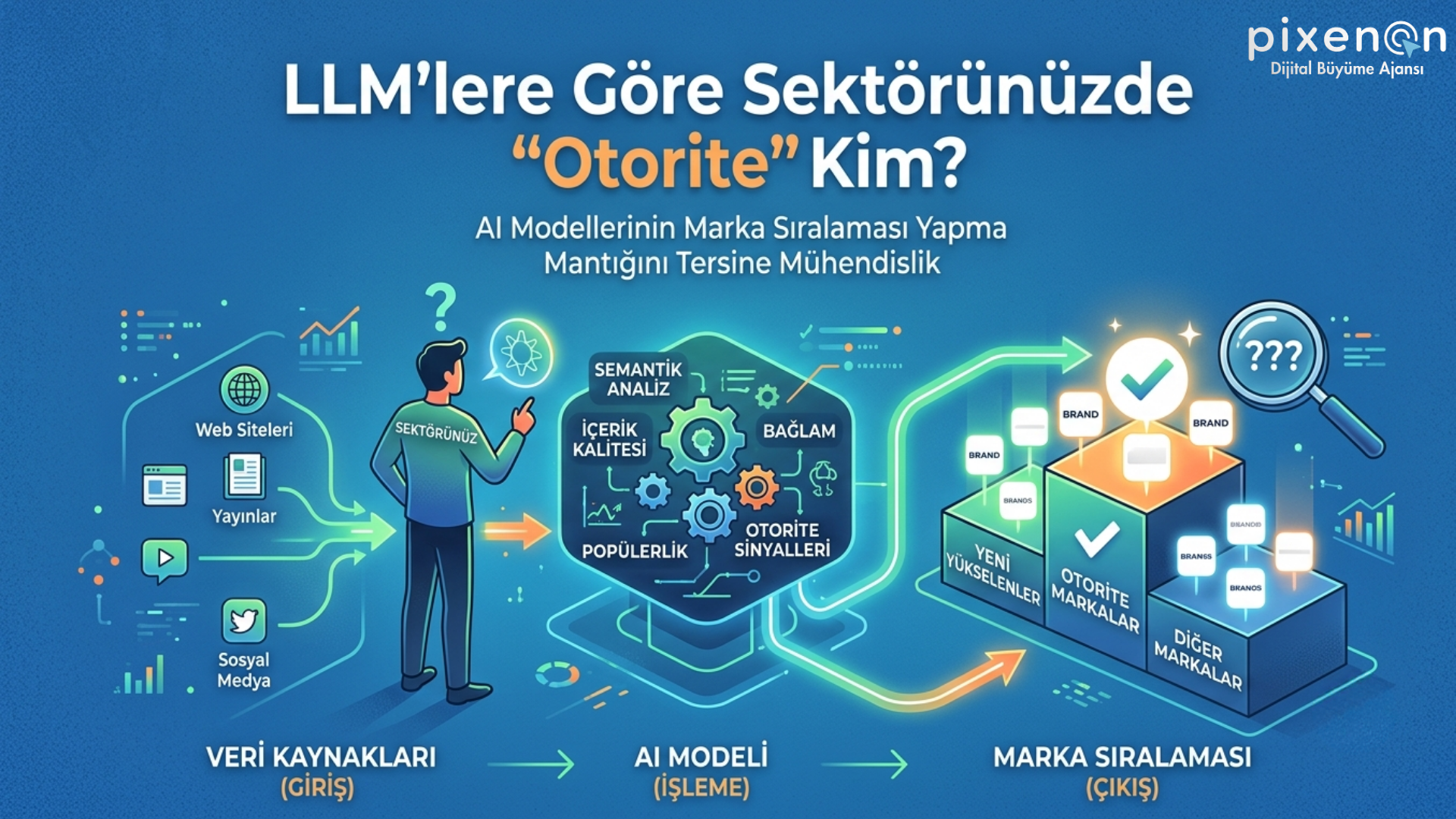
How do AI models generate brand descriptions? They synthesize information from multiple sources: training data (which may be months or years old), real-time web crawls, indexed content from authoritative sites, and structured data embedded in websites. Different models weight these sources in different ways.
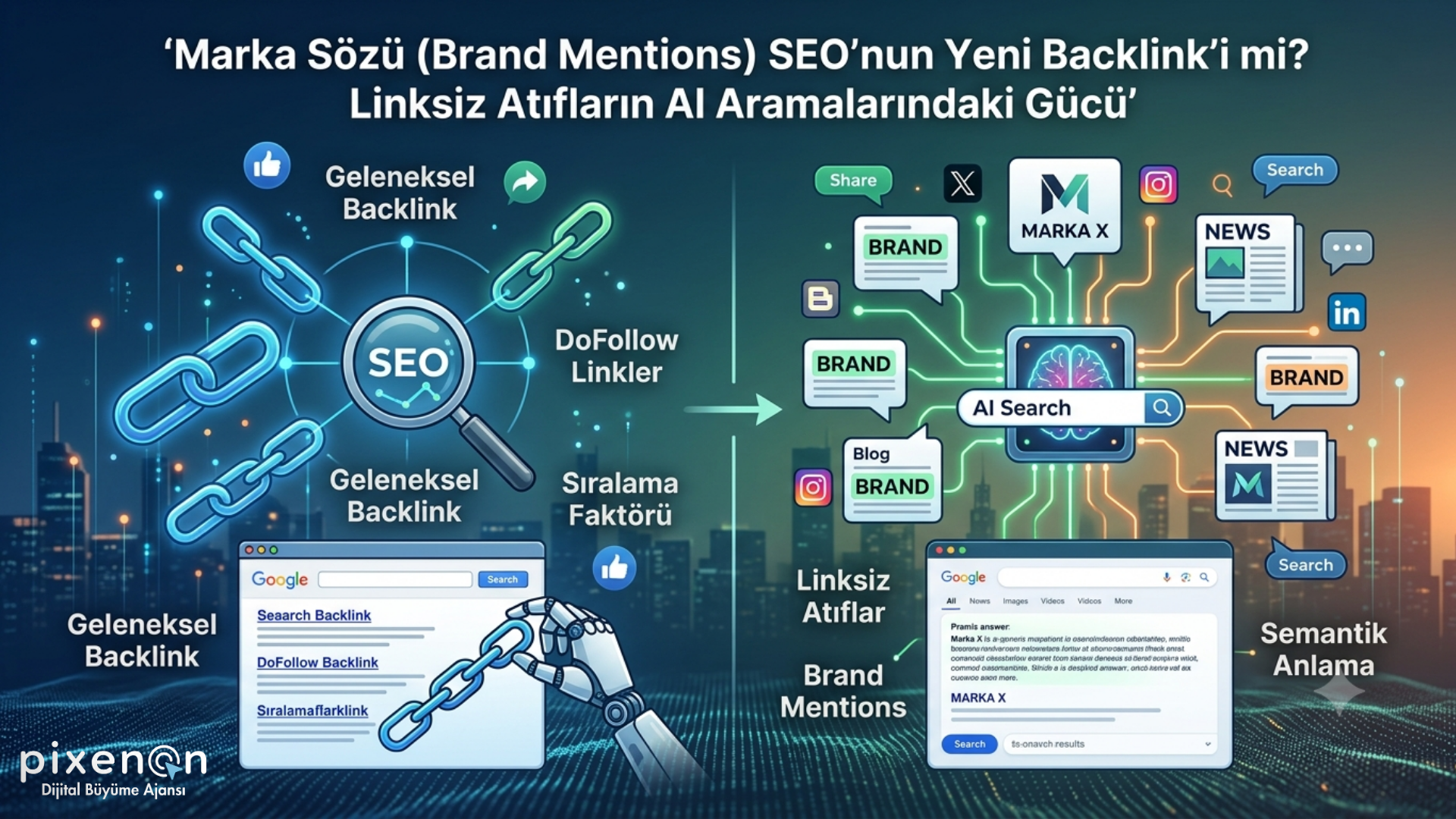
It’s useful to relate these four sources to the concepts we covered in our previous articles: “training data” and “indexed content” are connected to the entity consistency we discussed in our entity SEO and Knowledge Graph article; “real-time web crawls” are connected to third-party citations in our brand mentions article; and “structured data” directly overlaps with the schema automation in our AEO architecture article. The digital twin is, in fact, the combined output of all the topics in this series the AI-synthesized version of all your brand’s signals on the web.
How Do You “See” Your Digital Twin? A Practical Audit Process
Before you shape your digital twin, you need to see it. For this, we recommend a systematic audit process.
1. Determine which platforms matter. Not all AI platforms deserve equal attention. ChatGPT is dominant in consumer AI usage; Claude has established a significant place among professionals and technical users; Perplexity operates like an AI-powered search engine; Gemini is deeply integrated into Google’s ecosystem. Map which platforms actually influence your target audience’s decisions.
2. Create a “prompt library.” Aim for a library of 15-25 core prompts covering your main use cases. Too few misses important perception angles, while too many makes monitoring unsustainable. Quality beats quantity focus on prompts that reflect how your customers actually search.
3. Run this prompt library systematically on each platform. Open ChatGPT and run your entire prompt library, recording each response. Then repeat the same process with Claude, Perplexity, and other priority platforms. This takes time, but thoroughness matters more than speed in your baseline audit.
4. Record responses as-is; don’t summarize. Copy the full generated text into your monitoring system. AI responses contain nuances that reveal subtle but important perception patterns.
5. Leverage Perplexity’s citations. Perplexity shows its citations this is a treasure trove for your audit. When Perplexity cites a source, you can analyze why that source was chosen and why your content was not.
6. Note sentiment and accuracy. Is your brand mentioned accurately, what claims are made (about pricing, features, positioning), and are the cited sources (if any) correct? ChatGPT generally synthesizes safely from older training data, with minimal live retrieval unless Browse is explicitly triggered.
Scoring Approaches: From Visibility to “Market Role”
One way to structure the results of this audit is to use a multi-dimensional scoring framework. For example, some tools calculate a “Market Score” that classifies your brand’s “category role” (such as Leader, Challenger, or Niche Player) and “innovation perception” (such as Innovator vs. Traditional) based on AI signals.
This type of analysis queries how ChatGPT, Perplexity, and Gemini characterize your brand by entering your company name, location, industry, and core products/services, and ultimately delivers a composite score, a dimension-by-dimension breakdown, and a written commentary that helps identify perception gaps.
Low-scoring dimensions show where your visibility is weakest: a low “presence quality” score points to limited third-party coverage or weak website content, while a low “sentiment” score can indicate negative associations that need to be investigated.
Correction Roadmap: Closing Perception Gaps
Once the audit is complete, it’s time to build a “correction roadmap.” The metrics to track in this process are: the percentage of queries in which your brand is mentioned correctly, the reduction in critical errors, and improvement in category/problem-focused query representation.
Correction speed also differs across platforms. Gemini typically shows the fastest measurable improvement thanks to its real-time indexing feedback loop meaning when you update your structured data, your Google Business Profile, or gain new press coverage, these changes can be reflected in Gemini’s representation relatively quickly. For ChatGPT and training-data-heavy models, correction is more gradual.
Where Do Perception Inconsistencies Come From?
The “errors” in your digital twin usually come from three sources. First, outdated information your brand once did something different, served a different audience, or was in a different price segment, and content on the web still predominantly reflects this older state.
Second, insufficient third-party coverage there aren’t enough independent, reliable sources about your brand, so the model “doesn’t recognize” you or has a weak picture.
Third, accumulation of negative sentiment recurring negative themes in reviews or discussions influence the model’s sentiment assessment (we also covered this topic in our post-E-E-A-T trust signals article).
Each of these three sources requires a different correction strategy: content updates and removal/redirection of outdated material for outdated information; a digital PR and brand mention strategy (the “consensus vector” approach we covered in our previous articles) for missing coverage; and for negative sentiment, both real service quality improvements and making these improvements visible on the web.
“Shaping” Your Digital Twin: An Active Process
Everything we have covered so far has been about seeing your digital twin. But the real question is how you shape it. This is where all the strategies we covered in our other articles in this series work together:
Entity clarity (our Knowledge Graph article) forms the “core skeleton” of your digital twin — the most fundamental, most persistent information AI holds about what your brand is.
Brand mentions and the verification ecosystem (our articles on brand mentions and post-E-E-A-T signals) determine the “update speed” and “trust layer” of your digital twin — how often and in what context others mention you.
AEO architecture and query fan-out coverage (our previous articles) determine the “level of detail” of your digital twin — does the model have only a general idea about you, or does it also have specific information about particular use cases, pricing, and comparisons.
Sentiment management determines the “tone” of your digital twin — does the model speak about you positively, neutrally, or with recurring concerns.
Together, these four layers form the “idea AI has about you.” And this idea can influence the purchase decision without the user ever visiting you.
Pixenon’s Digital Twin Management Approach
As a growth agency, Pixenon’s first step when working with our clients is always a “digital twin audit”: we identify 15-25 core prompts that represent your brand, run them systematically across ChatGPT, Claude, Perplexity, and Gemini, and record the results.
This audit often surfaces unexpected findings that surprise company owners with “Is this how AI sees us?” — sometimes pleasant surprises (appearing as an authority on an unexpected topic), and sometimes gaps that need correcting (being associated with an outdated service area, or not being mentioned at all).
After this audit, we classify the findings across four layers (entity clarity, verification ecosystem, AEO/fan-out coverage, sentiment) and create a concrete action plan for each. Our founder Pixenon Group’s summary of this process: “Brands usually manage their own website, their own brochures, their own ads, but nobody manages the ‘themselves’ in AI’s eyes. Yet this has become the place that can be the customer’s first contact with you. We turn this unmanaged space into a measurable and shapeable one.”
A Twin You Don’t See Is Speaking on Your Behalf
Your company has a “digital twin” — whether you are aware of it or not. This twin is synthesized by AI models from scattered signals across the web and is “speaking” on your behalf to your potential customers in conversations you know nothing about.
Not knowing whether this twin is accurate, up to date, and reflects the positioning you want is no longer a risk that can be ignored — the entirety of your brand’s representation in the AI-powered discovery channel depends on this twin.
As a growth agency, Pixenon is here to audit your brand’s digital twin across major AI platforms, map existing perception gaps and opportunities, and build a concrete roadmap to align this twin with your real brand — or the brand you want to be.
Because in 2026, the question is no longer “what does our website say” — it is “what is AI telling our customers about us, and is this story really our story?”