What Is GEO and Why Does It Mean the End of Classic SEO?
\nFor a decade, digital visibility was played on a single playing field. Ranking high on Google, getting clicked, pulling traffic to your site. SEO was the name of this game, and the rules were known by everyone.
\n
\nKeyword research, backlink building, technical optimization, content calendar. Those who did these right won, those who neglected them fell behind. The majority of the digital marketing world was built on this game, and for over a decade this setup worked.
\n
\nNow the game has changed. And most brands are losing without realizing the change.
\n
The concept of GEO, that is, Generative Engine Optimization
\nIt entered the terminology with an academic study published in 2023 by researchers from Princeton, Georgia Tech, and IIT Delhi. This research, testing on 10,000 queries, proved that certain content techniques increased the rate of being cited by artificial intelligence systems by 30 to 40 percent.
\n
\nPublished at the KDD conference in 2024, this study had received 76 academic citations and been downloaded over 9,000 times as of March 2026. GEO is no longer a speculative concept but a discipline with measurable results.
\n
\nBut before understanding what GEO is, it is necessary to understand why it has become so important.
\n
\nChatGPT processes 2.5 billion prompts per day. 65 percent of these prompts carry a search nature, meaning the user is asking to find or learn something. Perplexity processes 100 million queries per month and responds by transparently showing its sources.
\n
\nGoogle AI Overviews now generates direct answers at the top of the page in 25 to 40 percent of all searches. When Gemini, Claude, and Microsoft Copilot are added to these surfaces, the picture becomes clear: search behavior is fundamentally changing.
\n
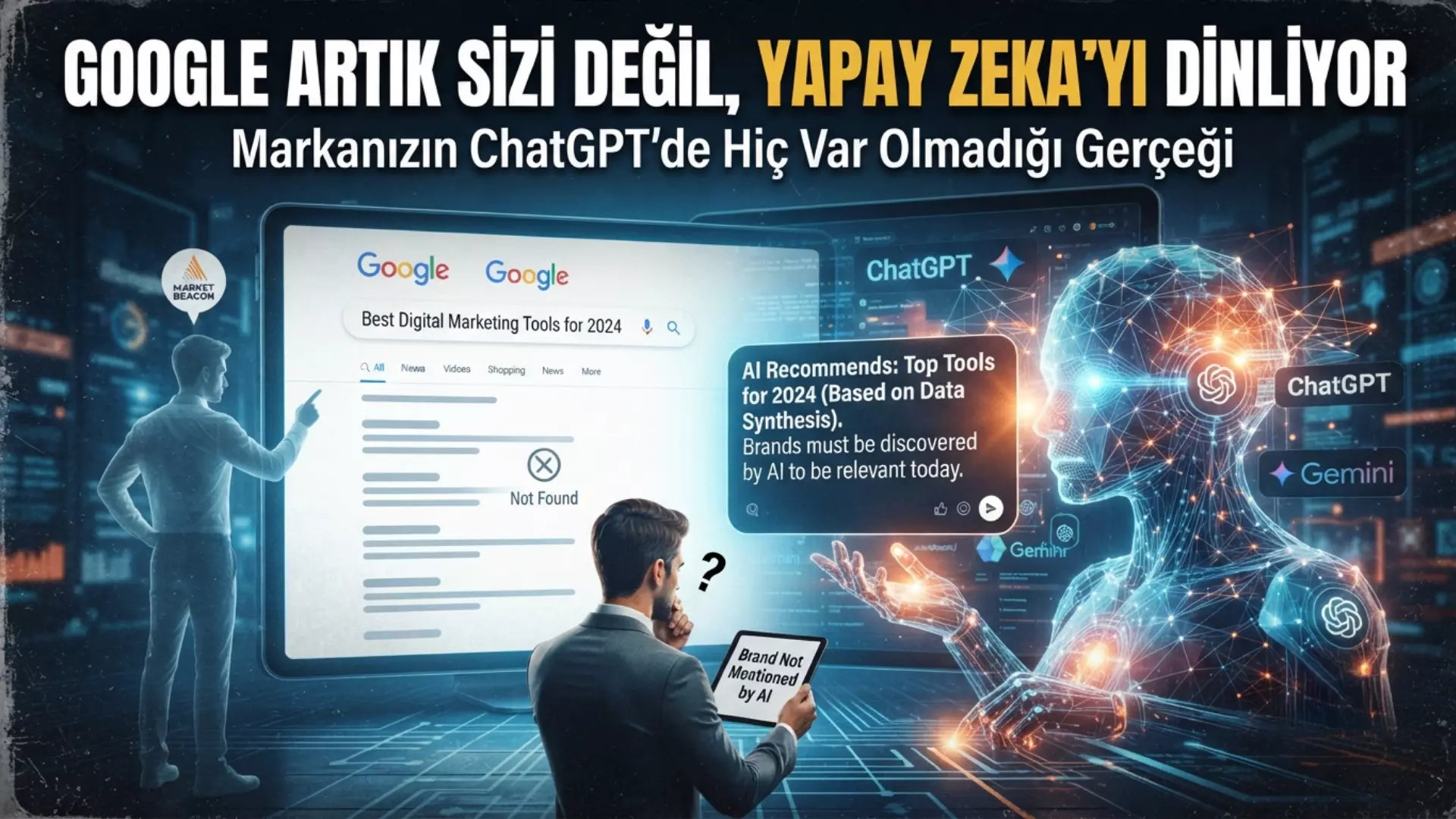
\nA traditional search engine shows the user ten blue links, and the user makes a choice. An artificial intelligence search system, on the other hand, produces a single synthesized answer. And within that answer, it mentions an average of two to four brands. To be included in the answer rather than in the ranking, a different game must be played. This is the name of that game: GEO.
\n
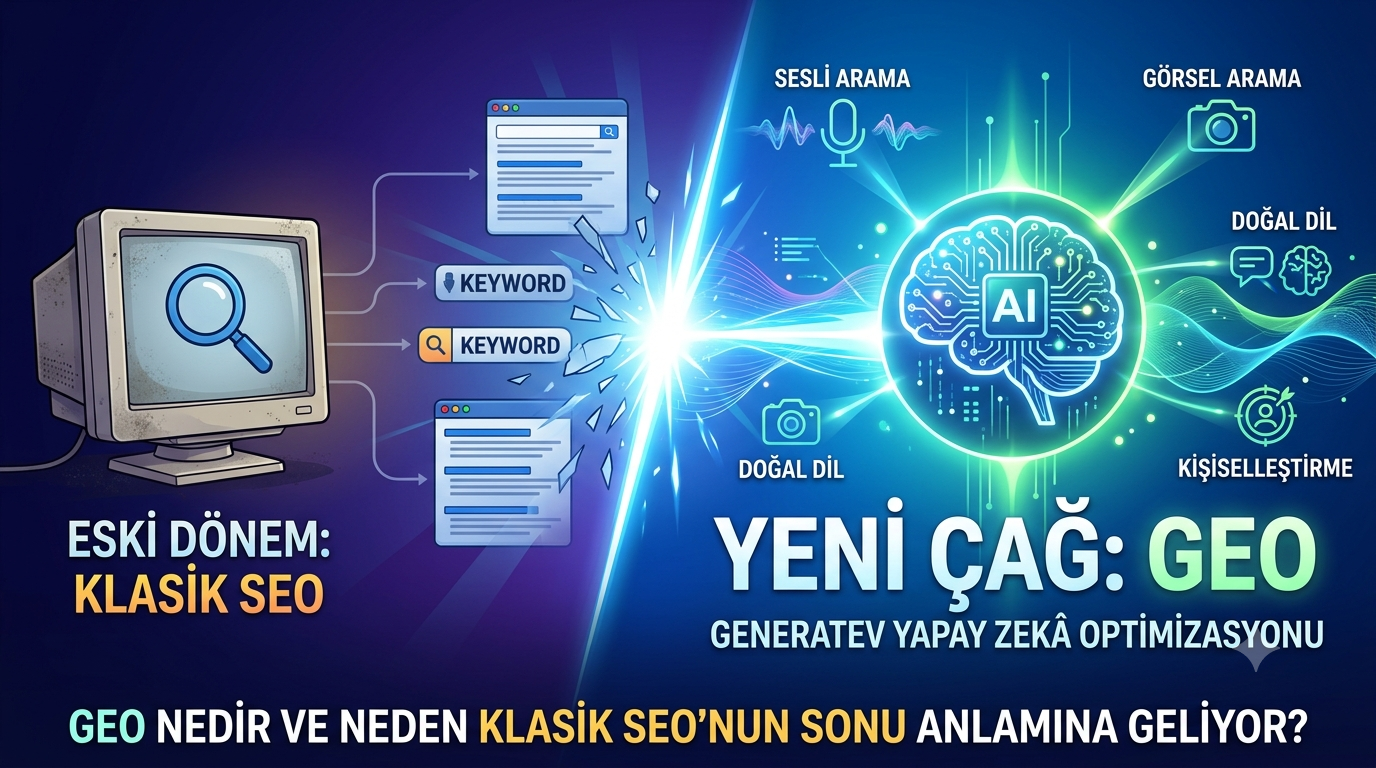
\nThe difference of GEO from classic SEO comes from the ground up. In SEO, content is optimized for the algorithm. Technical signals such as keyword density, backlink profile, page speed, and internal link structure influence the search engine’s ranking decision. In GEO, content is optimized for evaluation by a language model.
\n
\nA language model works very differently from a ranking algorithm; it is looking for an answer, scanning for evidence, selecting reliable sources, and synthesizing them to present in its own language.
\n
\nThe Princeton research offers very concrete data at this point. Adding statistics to content increases the probability of being cited by artificial intelligence by 41 percent. Citing sources increases it by 30 percent.
\n
\nAdding expert quotes increases it by 30 percent. On the other hand, keyword stuffing, the old weapon of classic SEO, creates a negative effect in GEO and reduces the probability of being cited by 9 percent. Artificial intelligence systems prefer natural language flow and read keyword repetition as a signal of insecurity.
\n
\nTranslating this difference into content production practice requires concrete changes. Content written for GEO begins each section with a question and immediately gives a clear answer. Paragraphs are kept short because artificial intelligence processes and cites short, independent text blocks much more easily.
\n
\nClaims are grounded in evidence; instead of abstract propositions, dated data, research references, and named sources are used. Headings are written in question format because artificial intelligence performs query matching, and a system that finds the question in the heading is more inclined to select that section as the answer.
\n
Is classic SEO completely over?
\nNo. It is not that simple, and those who defend this claim are misreading the data. According to Ahrefs’ late 2025 measurements, Google organic search still sends 345 times more traffic than the combined traffic of ChatGPT, Gemini, and Perplexity.
\n
\n93.67 percent of the sources shown in Google AI Overviews come from Google’s top 10 organic results. In other words, a strong SEO foundation remains a prerequisite for GEO.
\n
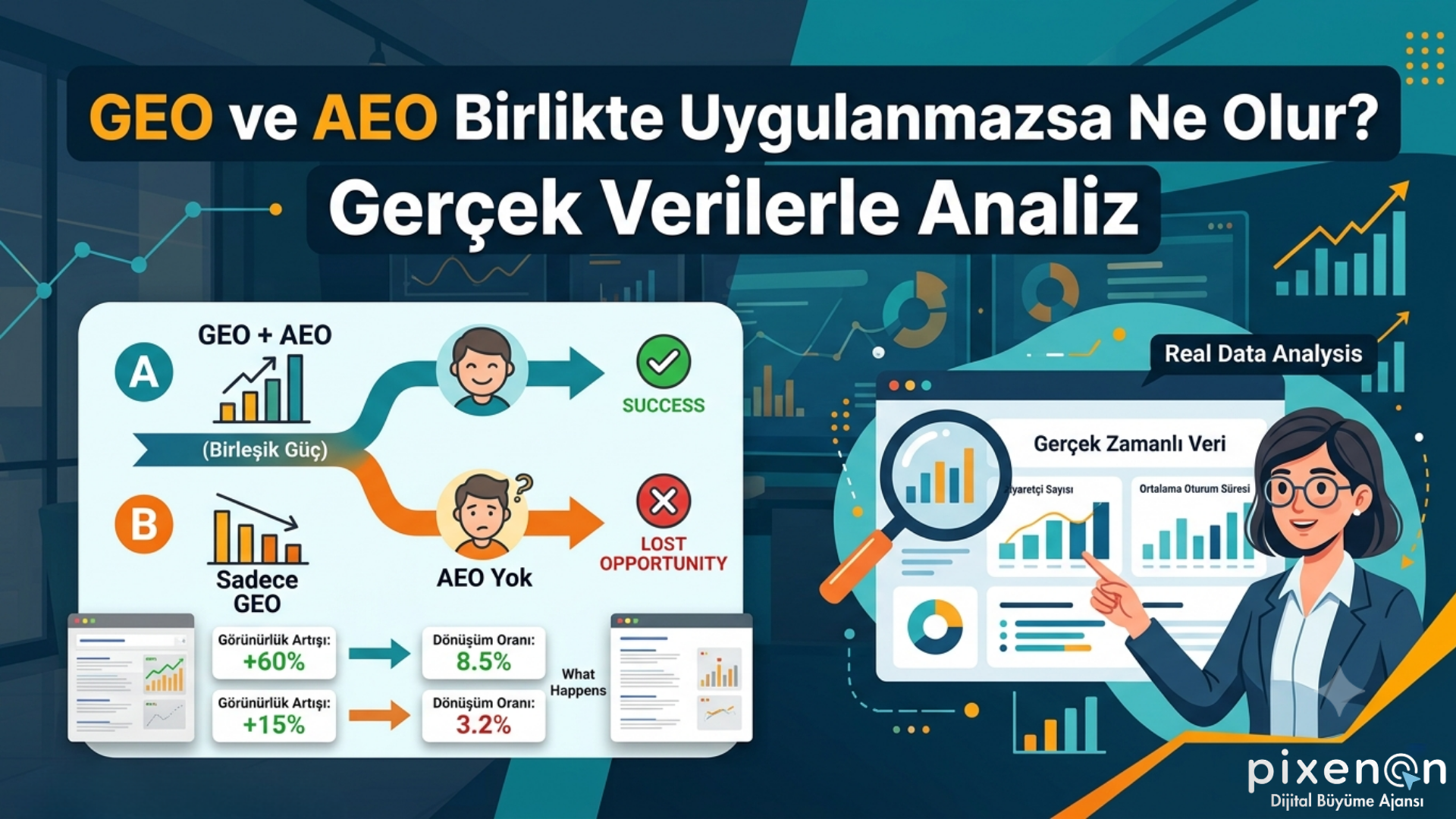
\nBut doing SEO as if it were sufficient on its own is a structural mistake in 2026. While the majority of traffic volume still comes from traditional search, the picture is strikingly different in terms of conversion quality.
\n
\nAccording to Seer Interactive’s 2025 measurements, visitors from ChatGPT convert at a rate of 14.2 to 15.9 percent. Those from Perplexity convert at 10.5 percent. Those from Claude reach up to 16.8 percent.
\n
\nThe average conversion rate of Google organic search, on the other hand, is 1.76 percent. This difference alone explains why artificial intelligence search visibility is so valuable.
\n
\nIn the US, the artificial intelligence market size is expected to exceed 365 million dollars in 2026, with an annual growth rate estimated at 42.9 percent. McKinsey predicts that by 2028, 750 billion dollars in revenue will flow through artificial intelligence search channels. These figures are not speculative but the natural extension of existing growth curves.
\n
\nIn this context, GEO is not a trend but a transition point. The fundamental logic of how digital visibility is earned is changing. There is a shift from ranking to being cited, from clicks to name mentions, from link authority to citation authority.
\n
\nBrands that understand this shift early gain a cumulative advantage. Those who are late both lose this time and spend far more resources to recover the position their competitor has gained.